Leveraging space technology for agricultural development and food security – 2025
Innovation from space to advance the global food security agenda.
Trafficability of open terrain remains a key issue in national security applications, both in operational and strategic defence planning context. Whereas in a strategic context, the planning entities may rely on irregularly updated soil maps produced on a national level and lower resolution, in operational (tactical) context, for planning defensive routes or predicting opponent’s offence, …
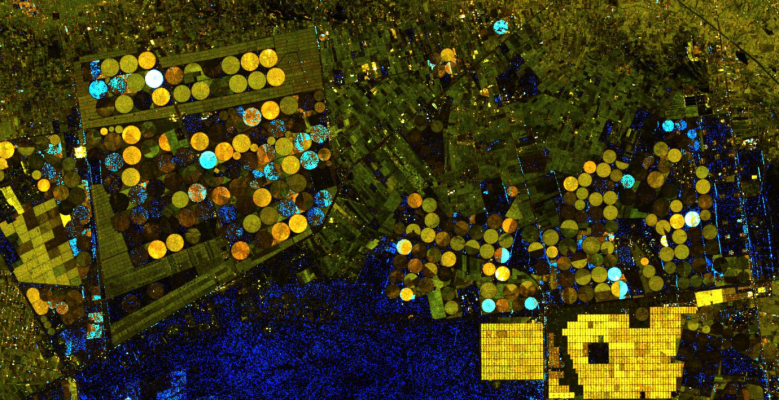
Background The Indian Space Research Organisation (ISRO), in association with the European Space Agency (ESA), are jointly organising a course on Advanced SAR Technologies & Applications. This course focuses on SAR data processing, polarimetry, and interferometry. It will cover a range of applications, from terrain mapping to vegetation analysis and ocean/coastal monitoring. Objectives The …
Regions with intensive agriculture often suffer from air pollution and acidification/nitrification of the soil. In addition, these regions are often responsible for the release of methane emissions. Methane (CH4), the second most important greenhouse gas (GHG) after carbon dioxide (CO2), is emitted from cattle farms, rice paddies and the use of manure. Excessive anthropogenic emissions …
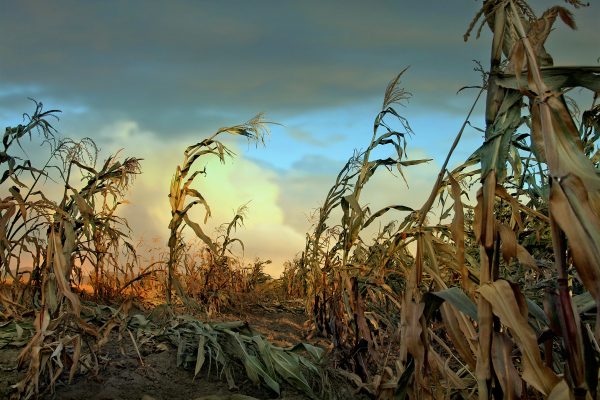
Drought poses a severe threat to global water and food security, risking numerous food production systems (FAO, 2011), leading to economic risks and financial hardships in both developed and developing economies (Aghakouchak et al., 2015; Fleming‐Muñoz et al., 2023). Agriculture, utilizing 70% of freshwater globally, faces significant challenges in water-scarce regions, especially during periods of …
The main goal of the current project is the need to support the EU Member States (MS) who have to oversee the EUDR, with an approach which can be used to help them identify and verify the crop type and geolocations that will be reported as part of the due diligence from companies dealing with …
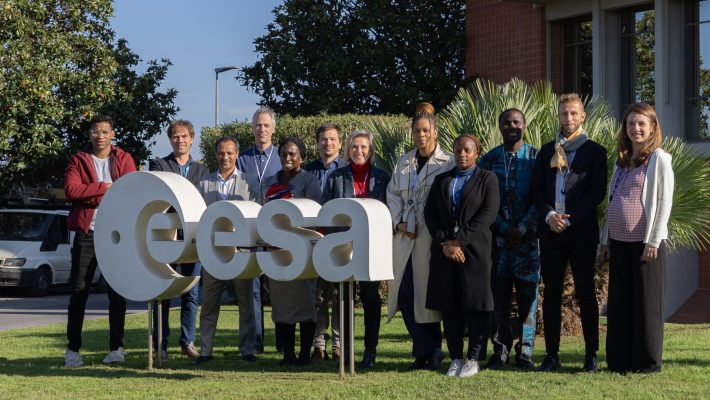
The African Research Fellows join ESA through the Earth Observation for African Framework for Research, Innovation, Communities and Applications Initiative (EO AFRICA), a program dedicated to advancing sustainable Earth Observation (EO) and space technology across Africa in collaboration with the African Union Commission. Through this unique opportunity, fellows are equipped to tackle Africa’s pressing food …
The EO4CSM project aims to develop a methodology that can improve the national monitoring of carbon (C) sequestration of agricultural soils for the Netherlands. The methodology is based on a dynamic carbon turnover model, RothC, that will be coupled with Earth Observation (EO) data at parcel level, which provides accurate and up to date information …
Two scientists working on ESA-funded research projects have recently been honoured with prestigious international awards for their exceptional contributions to Earth science and remote sensing. Felix Gerick, from CNES and the Royal Observatory of Belgium, was awarded the prestigious Doornbos Memorial Prize during the Study of the Earth’s Deep Interior (SEDI) conference, held in Great …
Background ESA is pleased to announce the organization of the 2024 EO for Africa Symposium in partnership with the African Union Commission (AUC), African Association of Remote Sensing of the Environment (AARSE), the European Commission (EC), the European Organization for the Exploitation of Meteorological Satellites (EUMETSAT), and the National Aeronautics and Space Administration (NASA). The …