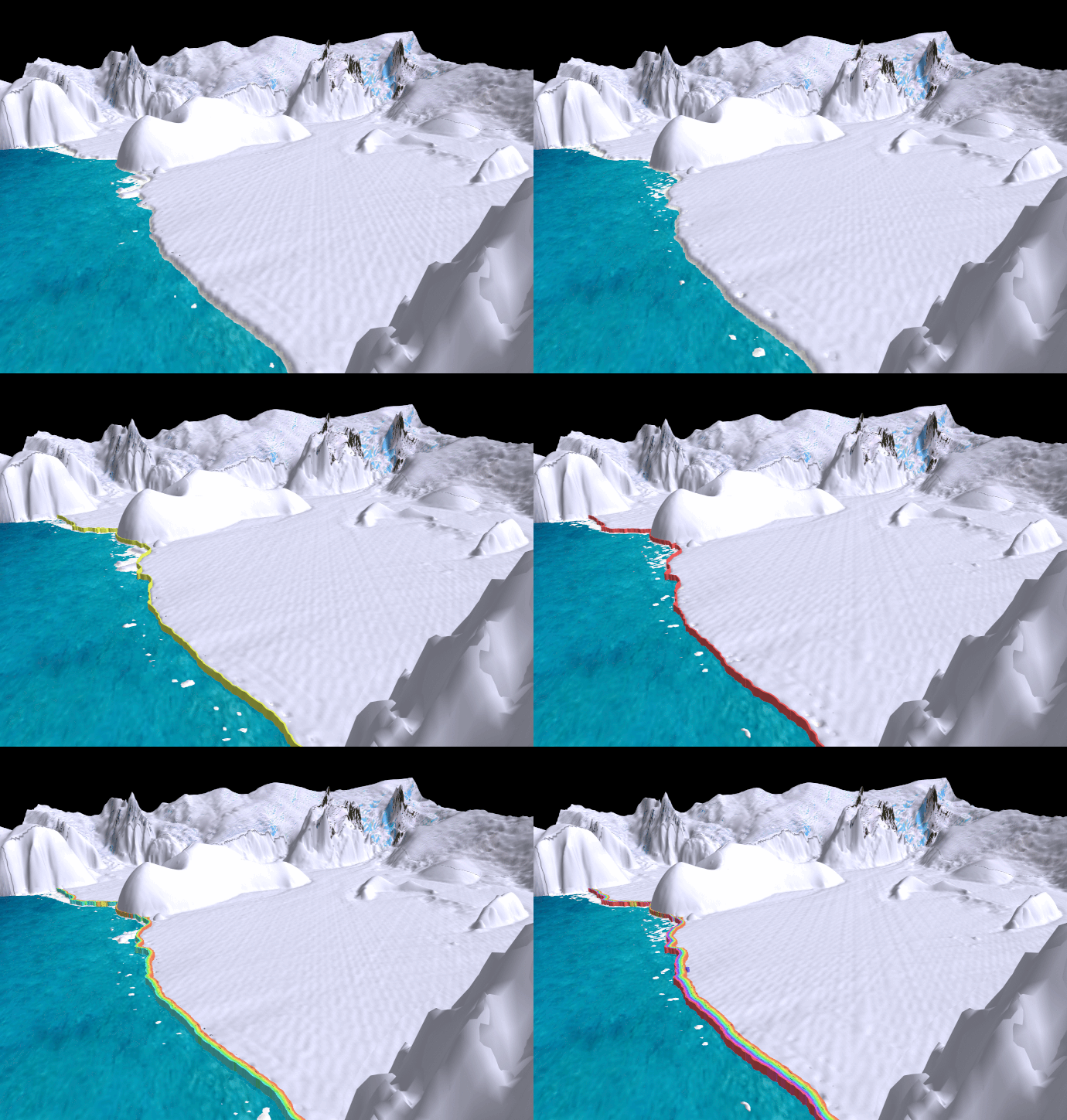
French earthquake fault mapped
Rapid processing and exchange of information within the geohazards community thanks to GEP thematic exploitation platform. Read the full story about the French earthquake case.
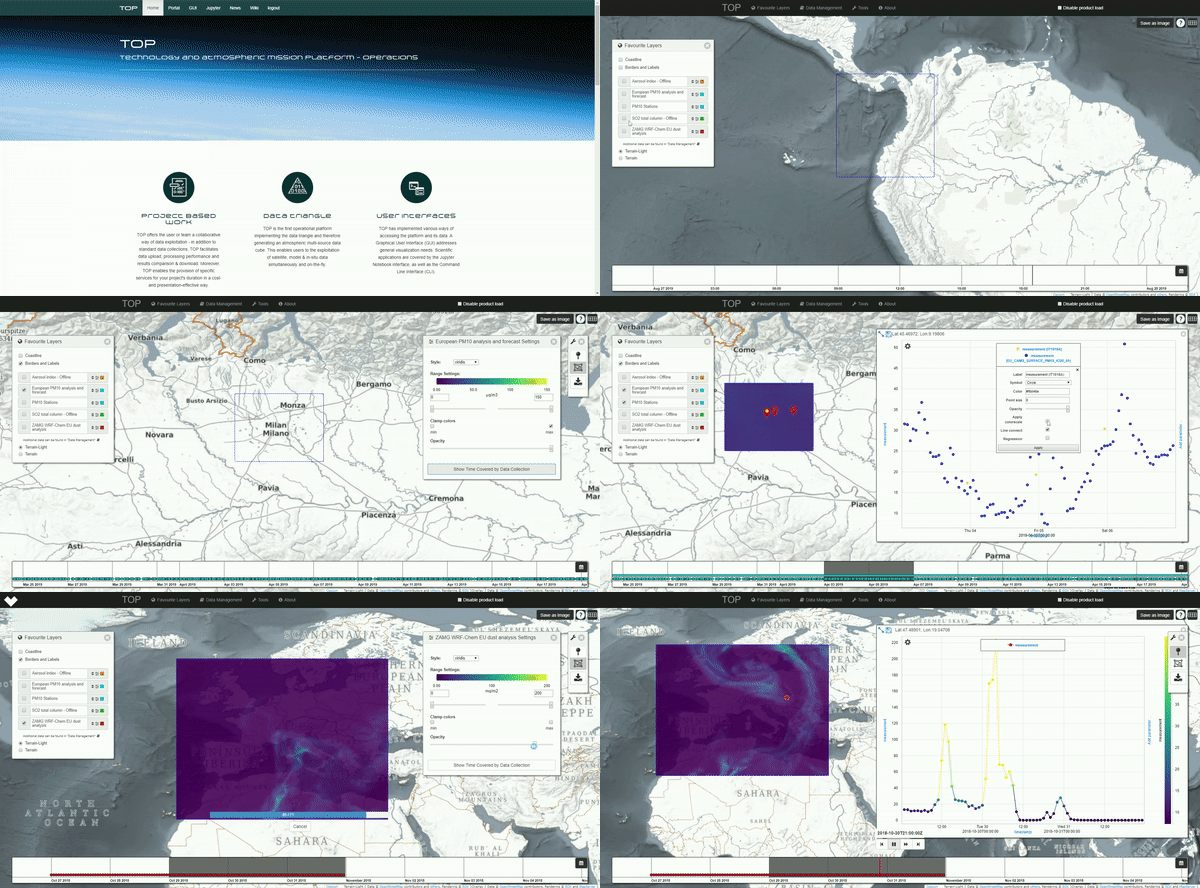
From Nov 4 – 8, 2019, the first joint European Space Agency (ESA) – European Organisation for the Exploitation of Meteorological Satellites (EUMETSAT) – Copernicus Atmosphere Monitoring Service (CAMS) training course on Atmospheric Composition with a focus on Air Quality took place in Cluj-Napoca, Romania (ACT2019). The course was co-organized with Babeş-Bolyai University (UBB), Cluj. …
Society is facing today a number of global environmental challenges requiring the better understanding and monitoring of the interconnected Earth System processes. Ocean is one key gearing of this complex engine. However, knowledge gaps remain in order to better understand, characterize and monitor its role in all major Earth System global cycles (e.g. water, energy, …
The 6th ESA Advanced Training Course on Ocean Remote Sensing, also referred to as Advanced Ocean Synergy Training Course, is taking place from 4 to 8 November 2019 at the Center of Mediterranean Architecture, Chania, Crete (Greece). Organized in cooperation with the Technical University of Crete, this course is part of a series dedicated to training …
The first ever Sargassum International Conference is taking place on October 24 to 26 at the World Trade Center Complex in Jarry, City of Baie-Mahault, Guadeloupe. This is a conference and expo where over 50 entities, including delegations from Caribbean countries, multilateral organizations and companies exploring a variety of technological approaches to sargassum seaweed monitoring, …
A recent study provides maps of man-made carbon dioxide anomalies around the globe. Carbon dioxide (CO2) is the most important anthropogenic greenhouse gas and its increase in the atmosphere is responsible for the global warming. CO2 is emitted into the atmosphere by the burning of fossil fuels. Satellite-based observations provide information on the concentration of …
Steve is a nighttime optical phenomenon shown to be associated with intense subauroral ion drifts (SAID). The phenomenon is described as a purple band of light equatorward of aurora and it is sometimes accompanied by periodic green emissions termed “picket fence”. There are several hypotheses on the physical mechanisms that could be causing Steve and …
Polar regions are undergoing major and drastic changes with significant impact at global scale. Addressing this unique set of global challenges will require more than ever that scientists advance their understanding of the different drivers governing changes in Polar regions, its associated processes and its potential impacts and translate that knowledge into solutions for society, …
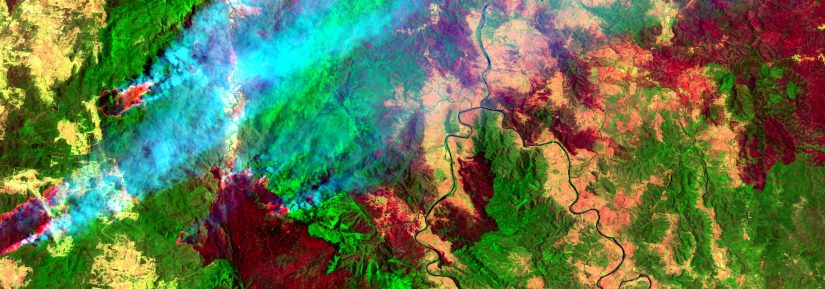
The active fire detection capability of the SLST sensor on board of the Copernicus constellation of Sentinel 3A and Sentinel 3B is being exploited by the European Space Agency to derive systematic consistent counting of fires worldwide. The prototype product and algorithm have been presented at the Remote sensing of forest fire EARSeL conference in …
The recent IPCC Special Report on the Ocean and Cryosphere highlights how we all depend on oceans and ice, and how they are intrinsic to the health of our planet – but stresses the many ways in which they are being altered by climate change. Read the full article