Margaret Gold: Citizen science
Open data and open data exploitation outcomes for a generation of citizens supporting science (~1.3 million volunteers for up to $2.5 billion in-kind annual contribution)
What is the impact of the blockchain technology on the future of Earth Observation? This overarching question has propelled extensive consultations that were held at community-led Blockchain Workshop organized at ESA/ESRIN during the first Ф-Week (phi-Week) on 15 November 2018. ESA explores the role of blockchain and Distributed Ledgers already since 2017 to understand better …
If you look up the meaning of ɸ there is a long explanation, but at the end it says ‘ɸ is also used as a symbol for the golden ratio and on other occasions for maths and science’ and I would now add, ‘and in space’ – space for the future.
With over 700 participants from space investors and entrepreneurs to scientists, the Φ-week is exploring new opportunities and seeding ideas. Overall it’s aiming to exploit the ‘perfect storm’ created by the wealth of data now available from traditional satellite missions and small satellite constellations coupled with technological advances, such as artificial intelligence, blockchain, virtual reality …
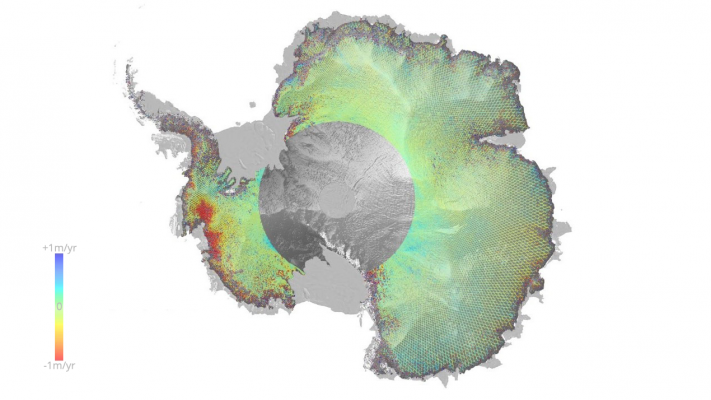
GOCE gravity images are revolutionising our ability to study the least understood continent on Earth, Antarctica
The combination of seismological and satellite gravity gradient imaging enhance our knowledge of Earth’s structure, especially in remote areas like the Antarctic continent, where even basic knowledge of lithospheric scale features is incomplete. A research team from Kiel University and the British Antarctic Survey exploited the satellite gravity gradients measured from 2009 to 2013 by …
Two more weeks to go until the end of Phase 1 – Identify a Climate Problem (4 October 2018 – 15 November) out of the three phases foreseen within the Climate Detectives school project. Following steps will be Phase 2 – Investigate the climate problem ( 10 January 2019 – 15 April 2019) and Phase 3 – Make a …
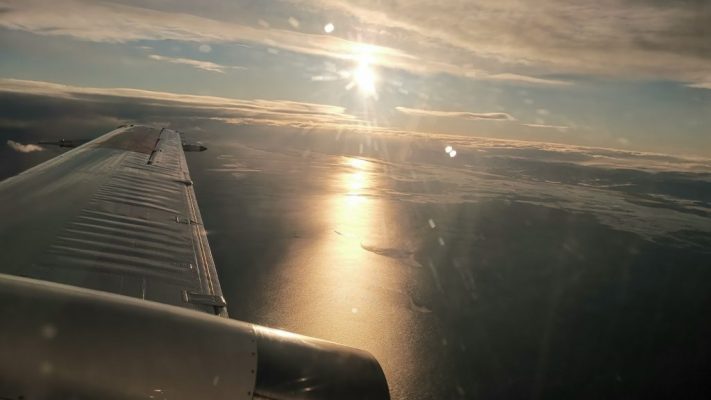
Royal Research Ship James Clark Ross started its roughly 4000 miles, 40 days voyage across the Atlantic Ocean at the end of September. It has been carrying out in situ measurements with an array of instruments including above-water radiometric optical sensors that measure upwelling radiance from the sea surface for validation of satellite ocean colour, …
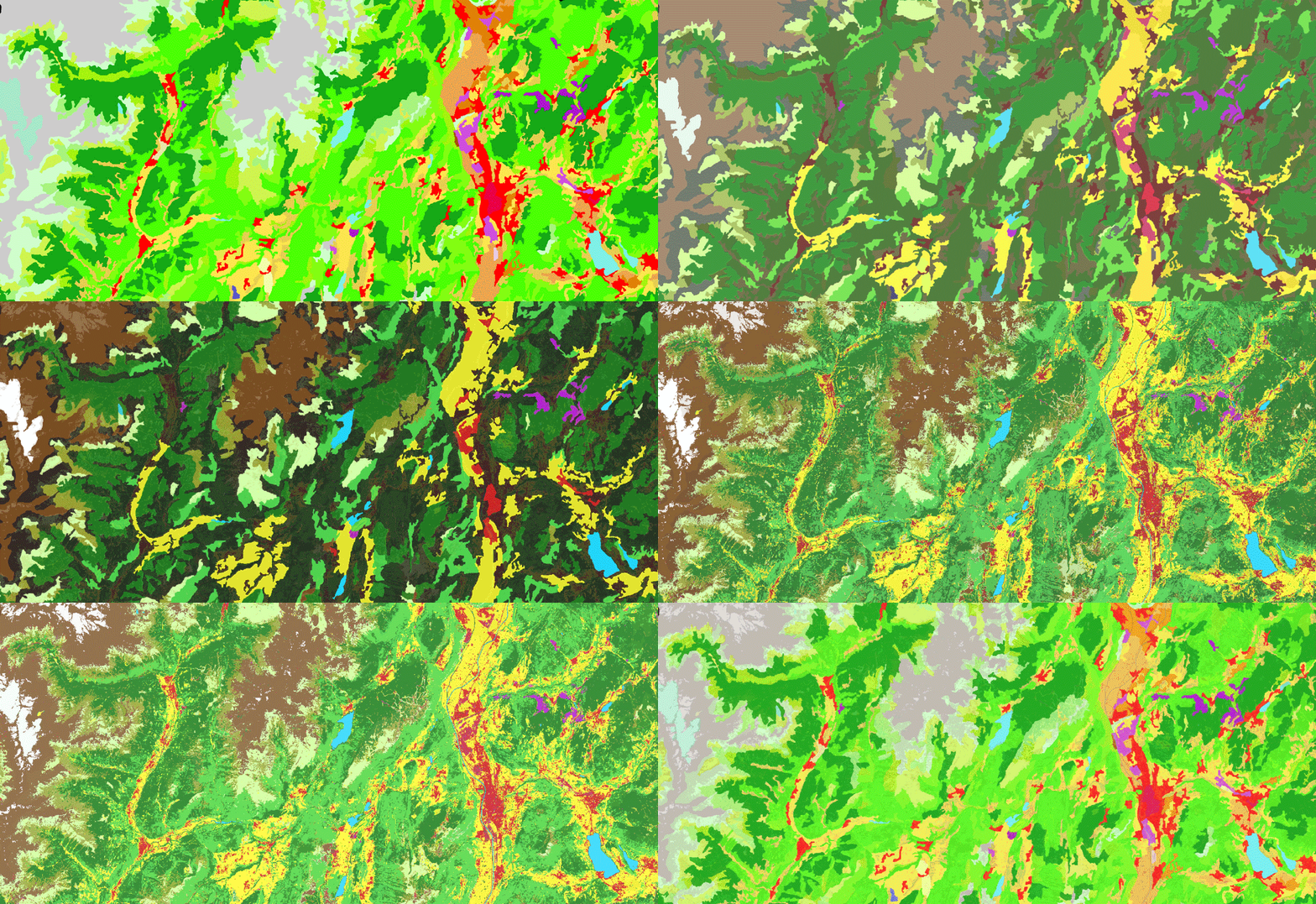
As part of a scientific collaboration with the Mexican Space Agency and other Mexican scientific public entities, ESA has combined images from the Copernicus Sentinel-2 mission to produce a detailed view of the different types of vegetation growing across the entire country. The high-resolution land-cover map combines images captured by Copernicus Sentinel-2 between 2016 and …
Three weeks to go before the start of the Φ-week event to take place at ESRIN, ESA’s Earth Observation centre in Frascati, Italy from 12-16 November 2018. The dense agenda is built around New Space with a special focus on EO. The event brings together emerging space Investors, tech leaders, start-ups and entrepreneurs with the space …