

Since the latest updates on the Green Transition Information Factories (GTIF) initiative, significant progress has been achieved across multiple fronts, reinforcing the role of Earth Observation in supporting the Green Transition. This update highlights key developments, including new GTIF instances, operational services, national-level consolidation efforts, and the evolution toward Information Factory projects. It also announces an important change regarding the GTIF demonstrator platform.
GTIF kick-starters: expanding capabilities and services
The GTIF Kick-Starter activities have led to the deployment of three new GTIF instances (Green Meridian Information Factory, Cerulean GTIF and Baltic GTIF), each introducing innovative capabilities tailored to specific user and stakeholder needs. These instances demonstrate the flexibility and scalability of the GTIF concept, enabling the showcasing and interactive exploration of Earth Observation-based solutions.
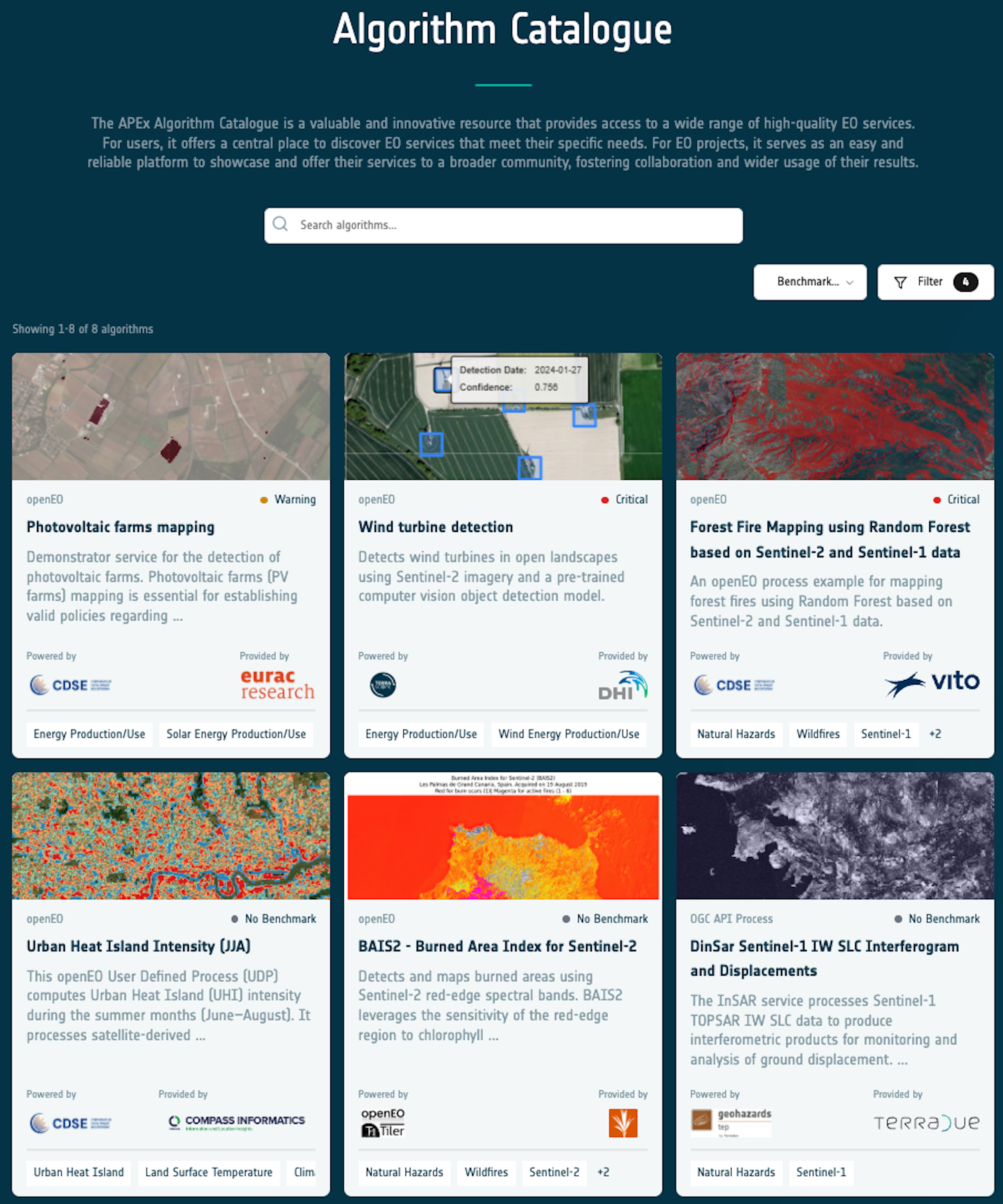
A notable outcome of these activities beyond the dashboards is the emergence of new on-demand value-adding algorithms, which allow users to run such algorithms without requiring deep technical expertise. These on-demand services mark a transition from R&D development to pre-operational solutions. These resulting on-demand algorithms are being made available to the community for re-use and adoption via the APEx Algorithm Catalogue.
One example is the Urban Heat Island (UHI) application, which enables the mapping of heat patterns in urban environments. This application was developed in the Green Meridian GTIF project and finally converted into a cloud based on demand algorithm. Such tools illustrate how GTIF is evolving toward actionable intelligence, supporting decision-making at local and regional levels.
GTIF Austria: from demonstration to sustainable operations and Austrian governance
GTIF Austria has reached an important milestone through its consolidation phase. The activity has successfully demonstrated how a national instance can mature from a pilot into a sustainable operational framework.
Key achievements include:
- Secured national funding approaching €10 million, underscoring strong institutional commitment.
- Development of a governance and sustainability model, ensuring long-term continuity beyond initial project funding.
- Strengthened integration with national stakeholders, positioning GTIF Austria as a reference model for other countries
- Enabled evidence-based discussions on previously sensitive policy topics.
This transition highlights the growing recognition of GTIF as a strategic asset for national environmental monitoring and policy support.
Information Factory projects: addressing the “last kilometer” challenge
Building on the GTIF concept, a new generation of Information Factory projects has been initiated. These projects aim to tackle the “last kilometer” challenge, bridging the gap between EO capability development and the uptake in real-world operational application domains.
Five contracts have been launched under this framework, focusing on:
- Delivering operational, user-centric services
- Enhancing accessibility and usability of EO-derived information
- Supporting decision-making processes in targeted sectors
- Addressing adaptation challenges three domains: agriculture, cities and energy.
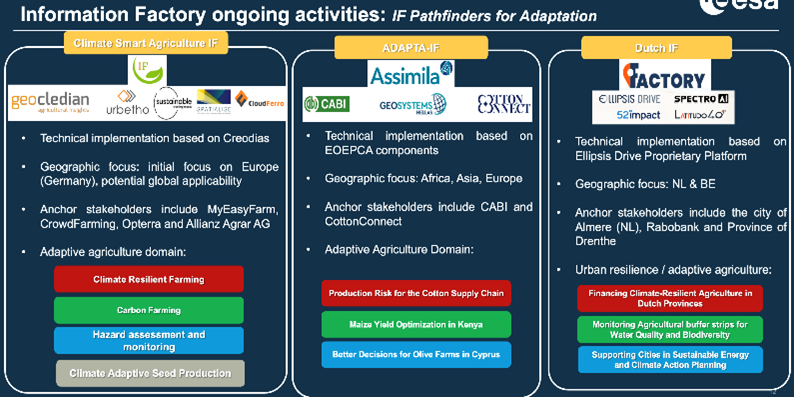
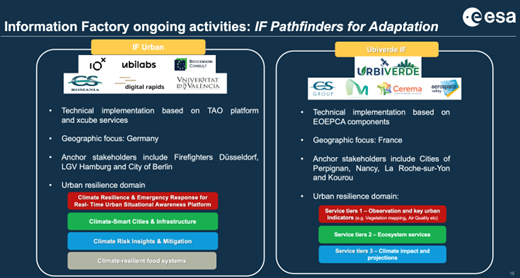
These projects represent a shift from infrastructure development to impact delivery, ensuring that the value of Earth Observation is fully realized at the user level.
Transition of the GTIF demonstrator platform
As the initiative evolves, the GTIF demonstrator (gtif.esa.int) will be discontinued. This change reflects the transition from a proof of concept demonstrator approach toward distributed, operational platforms and services developed under the GTIF and Information Factory frameworks. As such, future GTIF related showcases will be created using tools and algorithms from the APEx initiative (https://apex.esa.int/ ) and the results from the information factory contracts and other relevant activities enabled by the Earth Action program.
Users are encouraged to explore the emerging services and platforms developed through recent activities, which provide more advanced, scalable, and user-oriented capabilities.
Looking ahead
Over the last three years the GTIF initiative explored and demonstrated co-creation stakeholders and strong national engagement, sustainable funding models, and innovative interactive capabilities, delivering tangible societal and environmental benefits.
These concepts and achievements are feeding into the Earth Action program and will certainly trigger new and innovative uses of EO to address key challenges.
Further updates will follow as these activities progress and new services become available.