

Antarctica and the Southern Ocean play a fundamental role in the Earth system, yet the complexity of its processes and the logistical demands of polar research make international coordination essential.
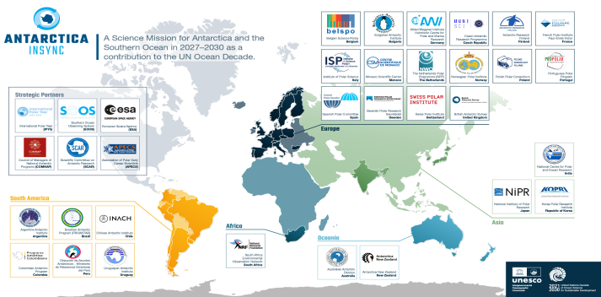
Antarctica InSync is designed to address this challenge by bringing together research communities, national polar programmes and observing infrastructures to coordinate synchronised, multidisciplinary observations across Antarctica and the Southern Ocean.
With its implementation and analysis phase planned for 2027–2030, Antarctica InSync is now moving from defining scientific priorities towards coordinating the practical activities needed to address them.
From scientific priorities to coordinated action
Last week, from 10 to 13 November 2026 at ESA-ESRIN in Frascati, ESA hosted the Antarctica InSync Implementation Workshop, bringing together more than 130 in-person participants from 29 countries. The meeting welcomed scientists and representatives of logistical operators from National Polar Programmes, with additional participants joining the plenary sessions online.
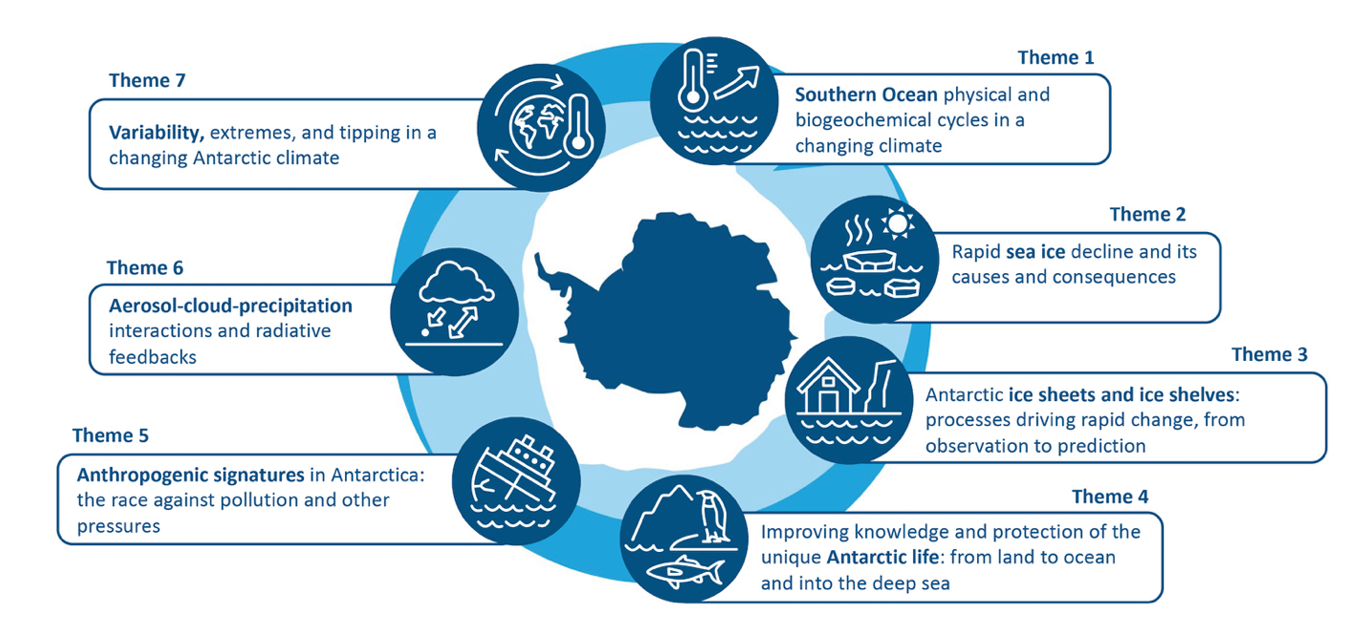
The workshop followed the successful Antarctica InSync Science Planning Workshop, also held at ESRIN in November 2025. That earlier meeting brought the international community together to identify shared scientific priorities and establish the foundations of the initiative. Its main outcome, the Antarctica InSync Science Plan, is now publicly available, setting out a framework for coordinated research across seven scientific themes, ranging from Southern Ocean physical and biogeochemical cycles, sea-ice decline and ice-sheet changes to Antarctic biodiversity, human impacts, atmospheric processes and climate variability.
Building on this scientific foundation, the 2026 workshop focused on translating these scientific priorities into coordinated observing activities. Discussions brought together scientists, campaign planners, logistics operators and data managers to identify opportunities for collaboration, align planned activities and address the practical requirements of implementing the Science Plan.
Sessions were organised around the individual science themes and cross-cutting groups, complemented by more focused discussions within working groups. The exchanges addressed the coordination of field campaigns, observing networks, measurement protocols, satellite missions, modelling activities and approaches to data management and sharing.
Building the Antarctica InSync Implementation Plan
A key outcome of the workshop will be the Antarctica InSync Implementation Plan, which will provide a practical framework for coordinating the initiative’s activities. The plan is expected to bring together several complementary components:
- Standard Operating Procedures (SOPs) for the collection of key scientific variables, supporting consistent and comparable observations across campaigns and research teams.
- A Campaign Catalogue, documenting the scientific campaigns planned as part of Antarctica InSync and highlighting opportunities for coordination.
- An Earth Observation Implementation Plan and Data Catalogue, outlining the contribution of satellite observations and the relevant datasets and products.
- A Modelling Catalogue, providing an overview of the wide range of modelling activities being undertaken across the different scientific themes.
- A Data Management Plan, addressing the coordination, interoperability, sharing and long-term accessibility of the data generated.
Together, these elements are intended to help ensure that observations collected by different countries, research programmes and platforms can be brought together and analysed within a coherent scientific framework.
Earth Observation as a connecting element
Earth Observation has an important role to play in Antarctica InSync.
For ESA, one of the key opportunities offered by Antarctica InSync is to maximise coordination between in-situ observing activities and satellite Earth Observation, particularly through field campaigns that can support the calibration and validation of satellite measurements and products. Better alignment between field observations and satellite data can improve their quality, reliability and scientific value.

Beyond this, Earth Observation datasets and products can make a significant contribution across the initiative’s scientific themes. By combining satellite observations with in-situ measurements and modelling, researchers can investigate processes that span different components of the Earth system, analyse change over larger spatial and temporal scales, strengthen links between traditionally separate research disciplines, and develop a more integrated understanding of change across Antarctica and the Southern Ocean.
The dedicated Earth Observation Cross-Cutting Group provides a framework for advancing this contribution, including improving the coverage and interoperability of satellite datasets, identifying new opportunities for Earth Observation-based research and ensuring that the value of satellite observations extends beyond the period of coordinated field activities and builds a legacy of observations for the Fifth International Polar Year in 2032-33.
Preparing for the next phase
The discussions at ESRIN mark an important step in turning the shared scientific vision of Antarctica InSync into an operational programme. In the coming weeks, the Implementation Plan will be further developed through consultation with the wider international community, with its final publication scheduled for early 2027.
Featured image: Group picture at Antarctica InSync Implementation Workshop.