

BIOMASS Science and Validation Workshop 2027
April 12, 2027 @ 08:00 - April 16, 2027 @ 17:00 UTC+1
University of Edinburgh
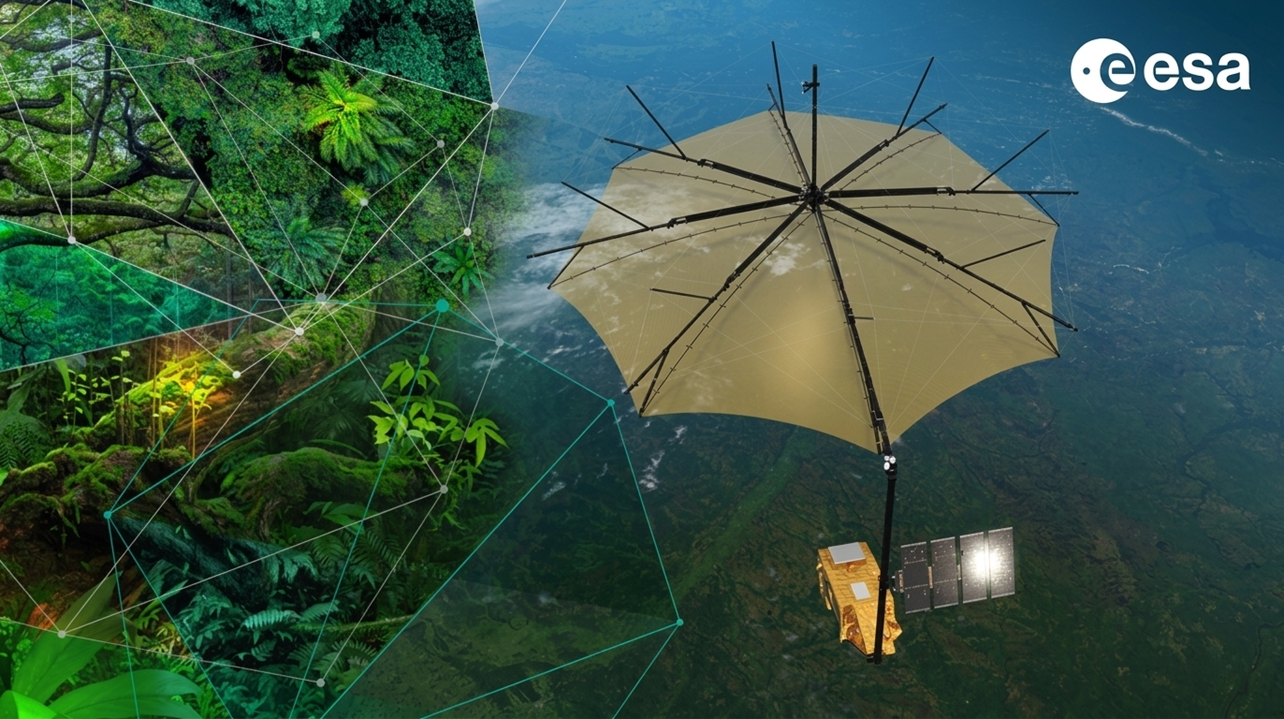
The event will be held in-person at the University of Edinburgh, United Kingdom between 12 and 16 April 2027.

BACKGROUND
BIOMASS is ESA’s seventh Earth Explorer mission. Its primary objective is to reduce uncertainty in the global distribution of forest biomass. Using fully polarimetric and interferometric P-band synthetic aperture radar, the mission will produce global maps of forest biomass stocks, disturbance, and growth. Beyond this primary objective, BIOMASS will pursue important secondary scientific objectives, advancing understanding of subsurface geology in arid regions and the structure and dynamics of ice sheets and glaciers.
OBJECTIVES
The objectives of the science and validation workshop are as follows:
- Provide an open forum for the science community to present and discuss BIOMASS science topics and results.
- Foster international collaboration in the scientific exploitation of BIOMASS.
- Identify novel, scientific use cases and applications for BIOMASS within and beyond the forest, desert, ice and ocean domains.
- Identify innovative information technologies that can support the exploitation of BIOMASS observations and the evolution of BIOMASS products and applications.
- Foster a new and diverse generation of remote-sensing scientists to exploit BIOMASS and complementary observations across its scientific domains.
- Identify recommendations on the BIOMASS scientific exploitation and future activities.
- Discuss the scope, methods and preliminary findings of the initial validation activities for Level 2A and 2B products.
- Assess validation results, uncertainties and data-quality limitations for Level 2 forest products, drawing on independent reference measurements and intercomparison activities.
- Coordinate priorities, protocols and future campaigns for sustained calibration and validation across the BIOMASS mission lifetime.
- Formulate recommendations for product improvements based on validation evidence, user experience and emerging scientific requirements.