

The burning of fossil fuels (oil, gas, coal) leads to both CO2 and NOx emissions. Therefore, satellite NO2 observations can provide a fingerprint of fossil fuel use.
Researchers from the DECSO-NRT project, funded under ESA’s Sentinel Users Preparation (SUP) initiative, have demonstrated how observations from the Copernicus Sentinel-5P mission can be used to monitor anthropogenic NOx emissions across Europe and identify the first large-scale signatures of declining fossil fuel consumption.
Sentinel-5P observations capture declining emissions
Comparing annual emissions, derived from Sentinel-5P, between 2019 and 2025 reveals a clear reduction in anthropogenic NOx emissions across much of Europe, as visible in the figure below.
These NO2 satellite-based observations closely align with the approximately 20% reduction in greenhouse gas emissions between 2019 and 2024 and a decrease in surface NO2 levels reported by the European Environment Agency, providing an independent line of evidence that Europe is making measurable progress towards decarbonisation alongside with improvement of air quality.
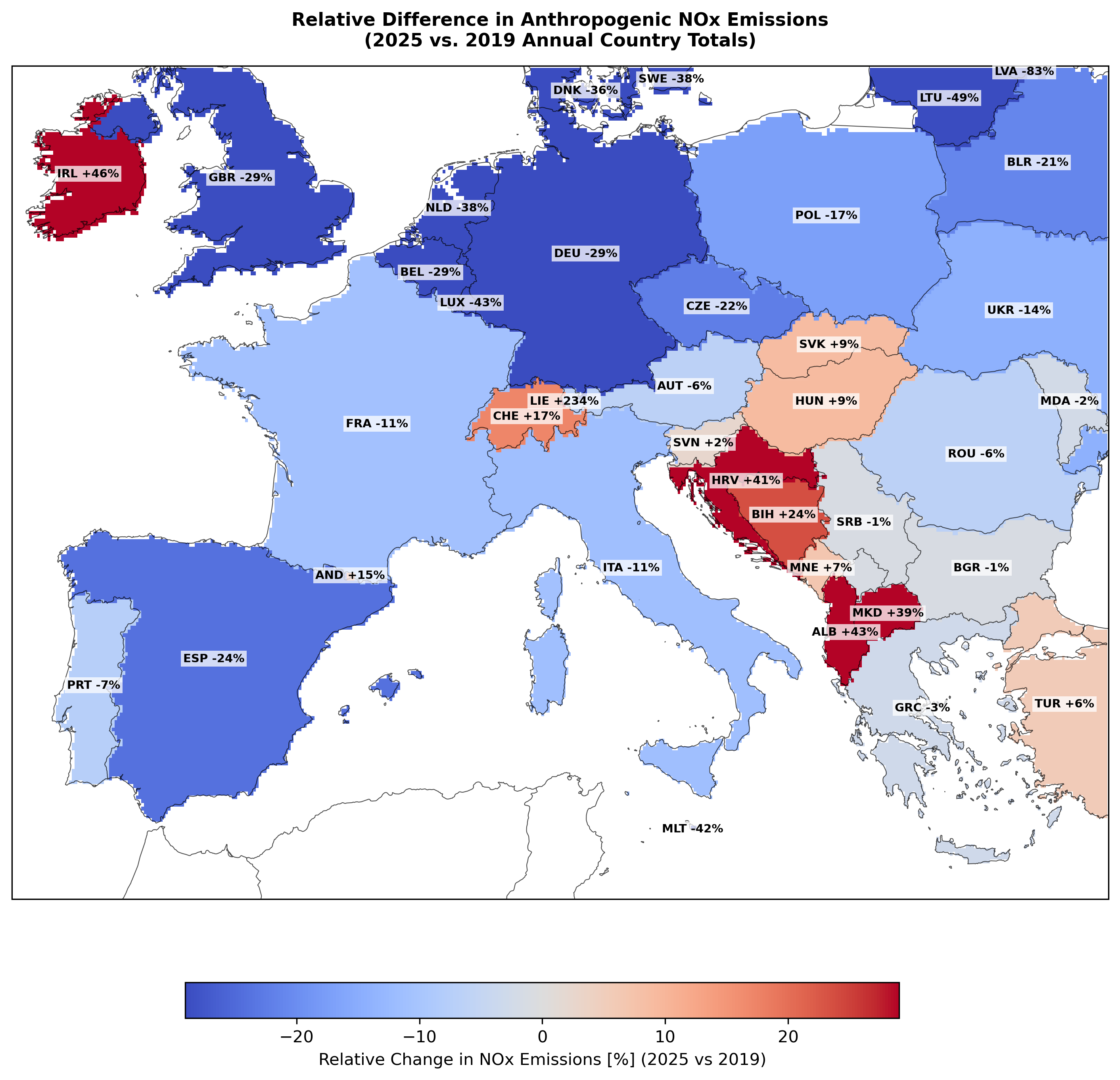
Country-level estimates indicate reductions in fossil fuel-related NOx emissions ranging from approximately 10% to 30% between 2019 and 2025.
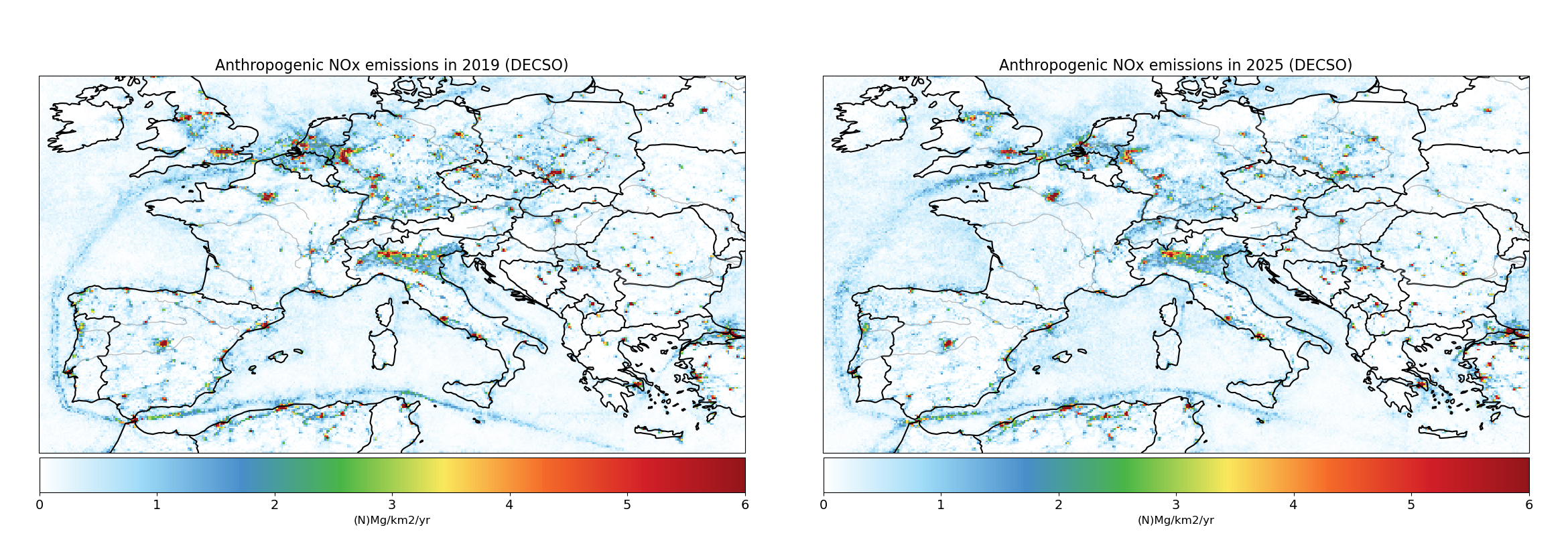
The spatial distribution of the anthropogenic NOx emissions in Europe is shown for the years 2019 and 2025 individually. The large European urban centres catch the eye, and it also includes the shipping emissions over the surrounding seas as seen by the satellite observations. In the shipping lanes we see significant differences between 2025 and 2019, further research is needed to quantify these changes.
Separating human activities from nature
Natural ecosystems and agricultural soils also emit nitrogen oxides (NOx), and these emissions can vary considerably during the year, showing seasonal and interannual variability. Using NOx as a proxy for fossil fuel consumption requires more than simply observing total atmospheric concentrations
To distinguish anthropogenic emissions from natural sources, DECSO-NRT separately quantifies biogenic NOx emissions, including emissions from croplands and natural soils (i.e. forests, grasslands, shrubs, and bare soil).
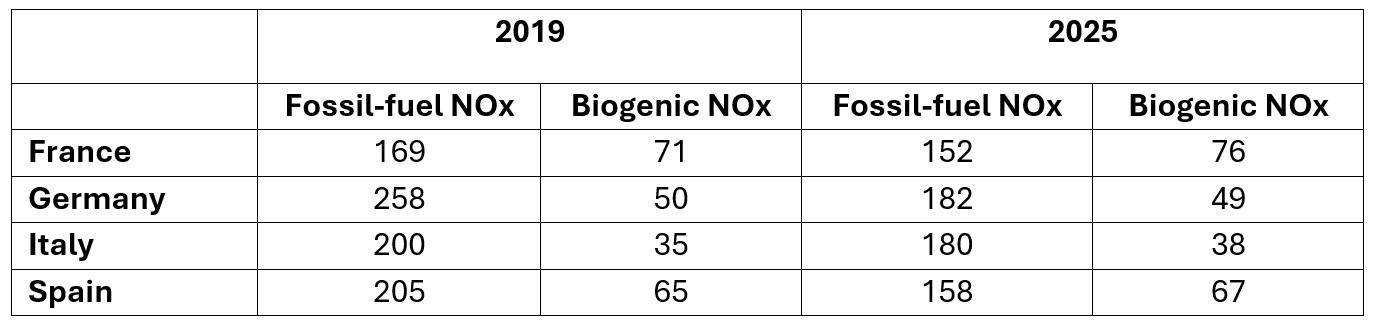
For the European countries analysed, annual biogenic emissions remain relatively stable between 2019 and 2025. However, meteorological conditions can produce substantial variability at regional scales.
Romania provides a striking example. During the exceptionally hot summer of 2022, forest soil emissions more than doubled compared with the same period in 2021, illustrating how heatwaves can temporarily enhance natural NOx emissions.
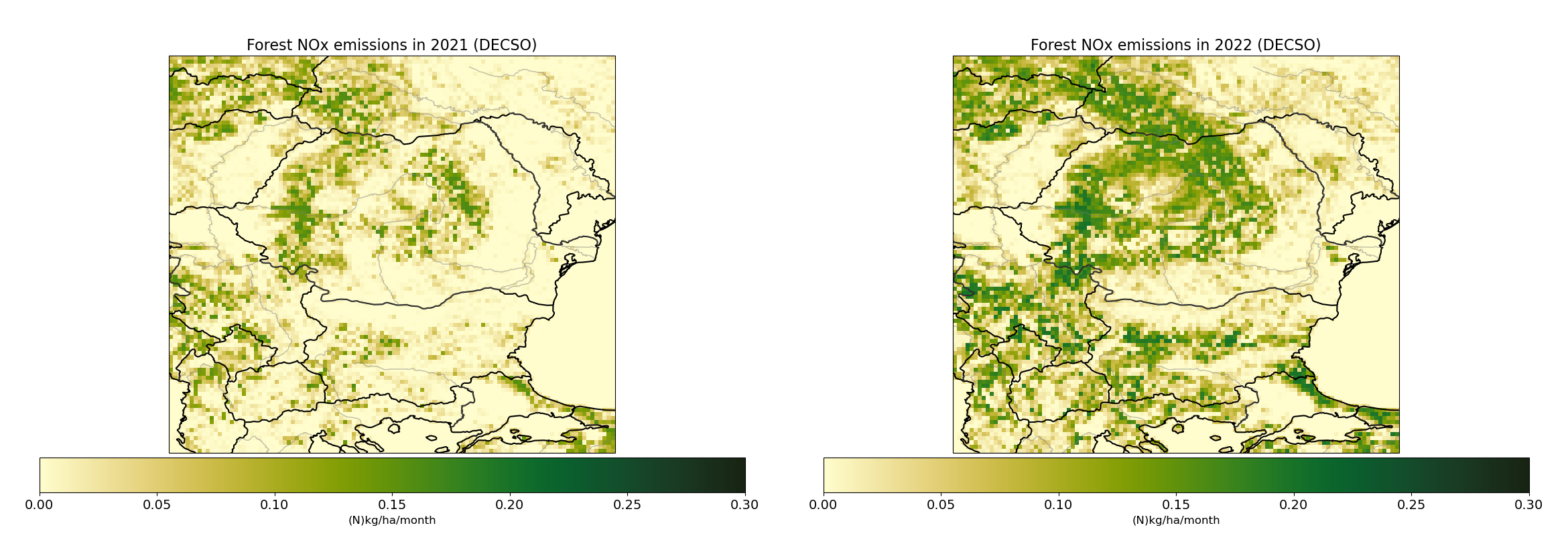
Agricultural emissions exhibit an equally pronounced seasonal cycle. Across Europe, cropland NOx emissions closely follow soil temperatures, increasing during warmer months and declining during winter.

Accounting for these natural and seasonal variations is essential to accurately quantify changes associated with fossil fuel combustion.
Supporting Europe’s decarbonisation monitoring
“The DECSO-NRT project aims to prototype a near-real-time NOx emission service for Europe based on Sentinel data”, says Ronald van der A, project manager of DECSO-NRT and team leader of the Emissions group at the Royal Netherlands Meteorological Institute (KNMI).
“The project is delivering monthly updates of both anthropogenic and biogenic emissions derived from Sentinel-5P observations, which provides a unique opportunity to monitor the pace of Europe’s energy transition almost as it happens”.
A portfolio of NRT products is available on the data portal.
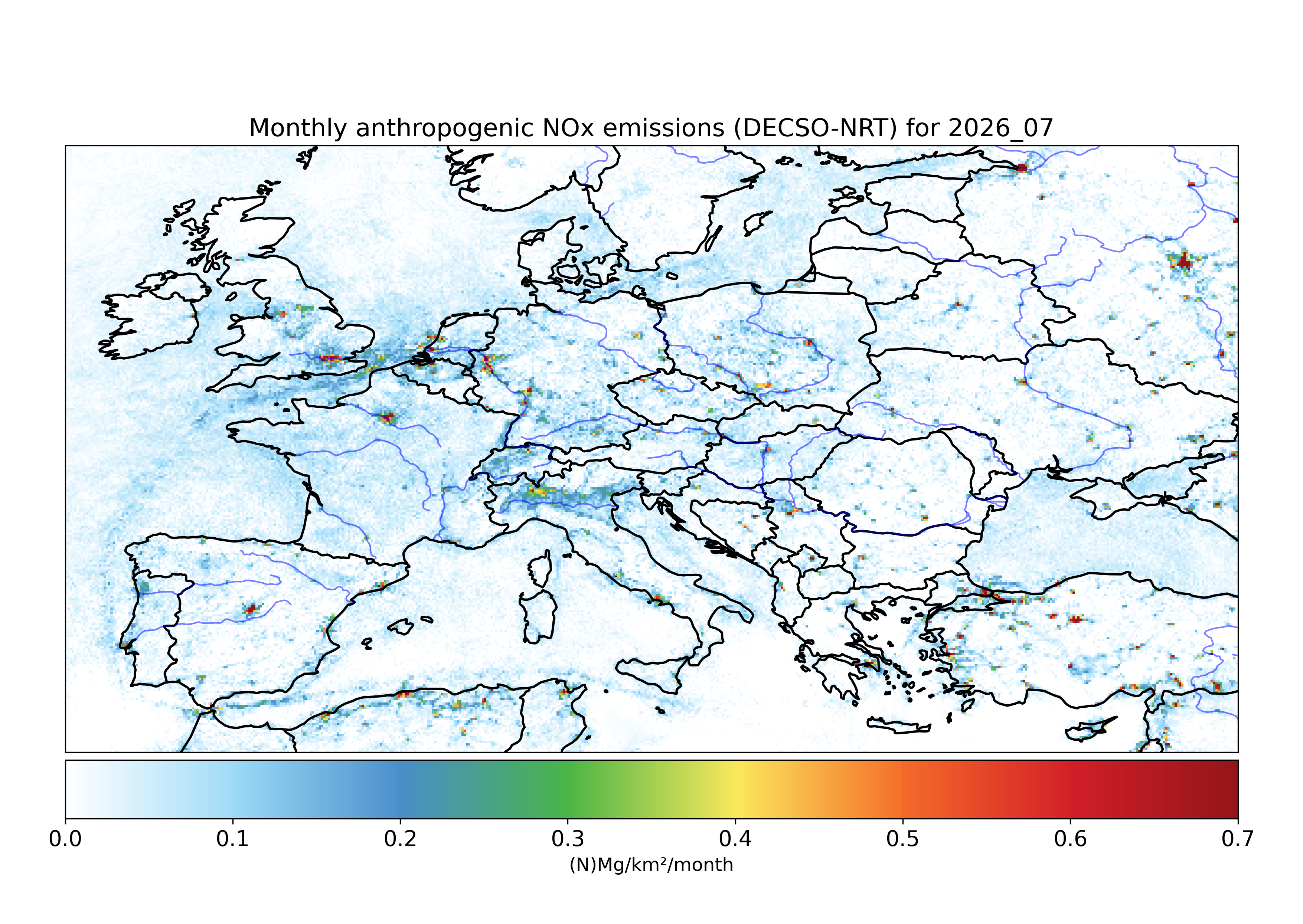
“The DECSO-NRT service allows us to follow the decarbonisation of Europe using Sentinel-5P, provided that the seasonal variability of biogenic emissions is properly quantified”, explains Michiel van Weele, Research Scientist at KNMI. “To quantitatively translate reductions in anthropogenic NOx emissions into reductions in fossil fuel use, detailed knowledge of evolving air quality regulations and changes in emission factors is also required.”
While declining NOx emissions provide a strong fingerprint of reduced fossil fuel combustion, interpreting these observations requires accounting for technological improvements, emission control policies and changes in combustion efficiency that affect NOx emissions independently of CO₂.
Looking ahead: Sentinel-4 and CO2M
The capabilities of the DECSO-NRT service are expected to expand significantly with the arrival of new Copernicus missions.
Sentinel-4 will provide continuous daytime observations over Europe, allowing scientists to characterise the diurnal cycle of atmospheric NO₂, while the future CO2M mission will deliver collocated measurements of NO₂ and CO₂ at high spatial resolution. Together, these complementary observations will improve the attribution of anthropogenic emissions to fossil fuel use and reduce current uncertainties.
Reconciling satellite-derived emissions with national emission inventories and activity data will remain an important area of research, with future developments expected within the framework of the Copernicus Atmosphere Monitoring Service (CAMS).
Future developments of DECSO-NRT will also focus on attributing anthropogenic emissions to individual economic sectors, including electricity generation, industry, residential heating, road transport, maritime shipping and agriculture.